
Martin County Court Records After a Jail Arrest
After an arrest and booking in Martin County, the criminal case moves into the Florida court system. The Office of the State Attorney for the Nineteenth Judicial Circuit prosecutes the case, and the Martin County Clerk of the Circuit Court and Comptroller keeps the case records. The arrest is one event; the court record is the running account of what the prosecutor charged and what the court did about it. That is why a court records search after an arrest tells you more than the jail roster alone.
The booking side and the court side answer different questions. For custody, booking dates, and the SO number, the jail inmate records page covers the roster, and booking photos sit on the jail mugshots page. The court record, by contrast, shows the charges the State Attorney actually filed, the bond the judge set, and how each count was resolved. Keeping the words court, records, and arrest tied together is the point: the court record is what an arrest becomes once a case opens.
How to Find Martin County Court Records After an Arrest
Case records live in the Clerk's online system, not the jail roster. The Martin County Clerk of the Circuit Court hosts a public case search, and the Benchmark Web search portal is the search screen itself. A defendant name or a case number is the usual way in.
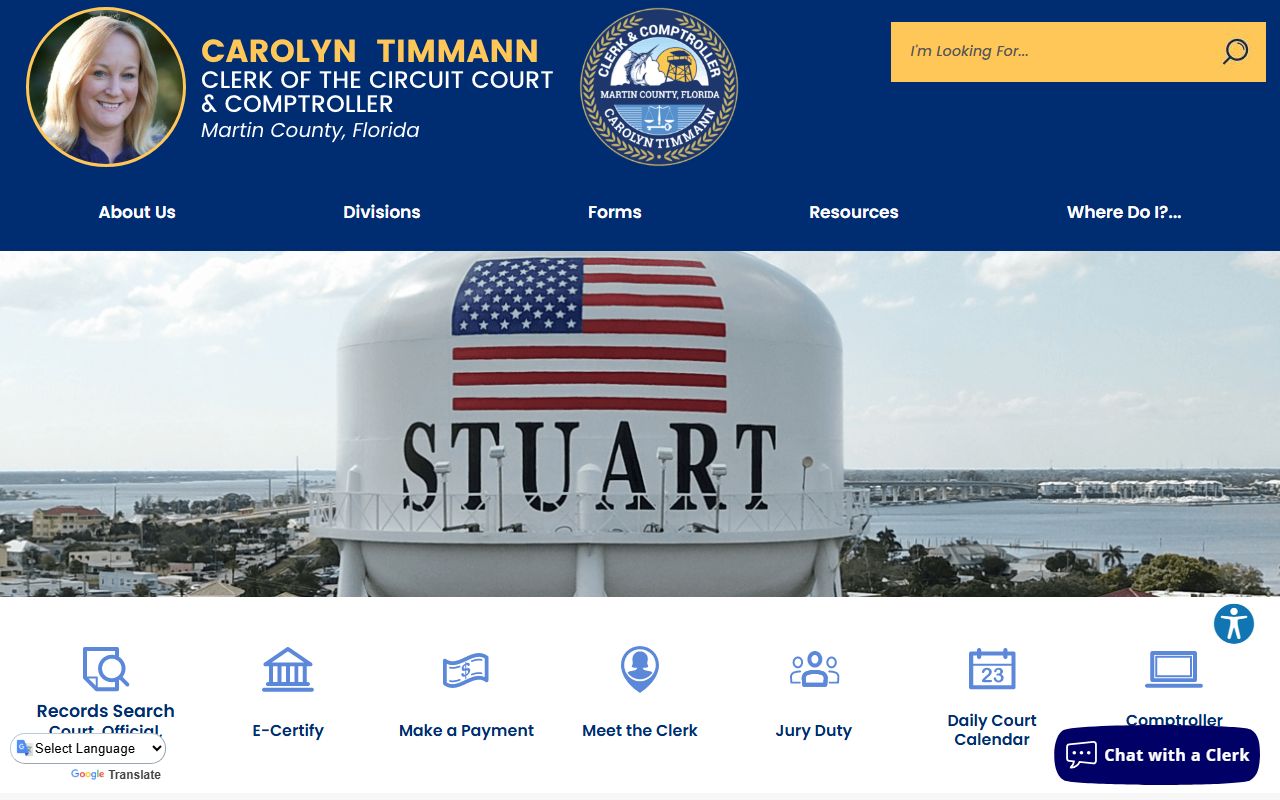
From the Clerk's portal you can open a criminal case docket to read the filed charges, the status of each count, and the court dates.
- Open the Martin County Clerk Benchmark Web case search portal.
- Search by the defendant's name or by the case number if you have one.
- Open the case and read the charge list the prosecutor filed.
- Check each charge's statute, level, and current status, plus any bond or court date.
For a statewide criminal history rather than a single county case, the FDLE criminal history record check is the official tool, separate from both the jail roster and the county clerk.
How Charges Get Filed After an Arrest: Complaint, Information, and Indictment
The path runs from the arrest forward. Booking happens at the jail, and then the formal charge record begins when a charging document is filed. In Florida felony practice the prosecutor most often files an information, while a grand jury returns an indictment for the most serious cases, and a complaint or sworn allegation can start the process. The document type tells you how the case entered the court.
| Complaint | Information | Indictment | |
|---|---|---|---|
| Filed By | Officer / Prosecutor | State Attorney | Grand Jury |
| Common For | Initial allegation | Many Florida felonies | Most serious felonies |
| Starts | The process | The case | The case |
Charge Status and What It Means After an Arrest
Charges shift as a case moves. The State Attorney can file the arrest charge as is, amend it, reduce it, add counts, decline to file, or drop the case. That is why the booking charge on the jail roster is not always the final filed charge in the court record. The status labels below appear in Florida criminal dockets.
| Status | What It Means |
|---|---|
| Pending | The case or charge is still active and not yet resolved |
| Amended / Reduced | The prosecutor or court changed the charge from the arrest version |
| Dismissed | The charge ended without a conviction |
| Nolle Prosequi | The prosecutor formally declined or dropped the prosecution |
Note: a final disposition can read as guilty, not guilty, dismissed, adjudication withheld, or a probation term, and none of those is the same as the original booking charge.
Bond and Release After an Arrest
Bond is usually addressed at first appearance, the early hearing after an arrest where a judge can set conditions. The jail roster in Martin County shows practical bond data, with cash or surety amounts on bondable charges and a not bondable status on others. A hold or detainer can keep a person in custody even after bond is posted on one charge.
The State Attorney's office is the prosecuting agency that carries the charges forward after the arrest, while the judge sets bond and the Clerk records it.
| Bond Type | How It Works |
|---|---|
| Cash Bond | The full amount is posted directly with the court or jail authority |
| Surety Bond | A licensed Florida bail agent posts the bond for a fee |
| PR / Own Recognizance | A judge releases the person on a written promise, with no money posted |
| No-Bond Hold | Release is blocked by a judicial order, a violation, a warrant, or a detainer |
Warrants That Lead to an Arrest
Many bookings start with a warrant. An outstanding arrest warrant, a bench warrant for a missed court date, or a capias can all result in a new jail booking, and the roster may then show the arresting agency, charge description, bond, and a case number. Martin County does not publish a separate online active-warrant search in its official materials, so the practical checks are the jail roster after a booking and the Clerk's case search for the underlying case.
When a warrant is involved, the Sheriff's non-emergency lines at 772-220-7000 and 772-220-7170 and the jail line at 772-220-7200 can confirm a custody status, and a public records request covers non-exempt warrant or arrest records that are not online. Anyone who believes they have an active warrant should contact the court or an attorney about surrender and bond rather than acting on roster data alone.
Court Record Terms After an Arrest
Court dockets use words that never appear on a jail roster, and a few definitions make a Martin County case file much clearer. These show up on most criminal cases that follow an arrest.
- Information
- The charging document a Florida State Attorney files to begin many felony cases.
- Indictment
- A charging document returned by a grand jury, used for the most serious cases.
- Capias
- A court-issued order to take a person into custody, often after a missed court date.
- Nolle prosequi
- A formal notice that the prosecutor is dropping or declining a charge.
- Adjudication withheld
- A Florida outcome where the court holds back a formal conviction, often with probation.
- Disposition
- The final result recorded for a charge, such as guilty, dismissed, or acquitted.
Charges vs. Convictions in the Court Record
An arrest and a filed charge are accusations, not proof. A conviction only happens after a plea or a verdict, and the court record keeps the two stages distinct. Reading a docket means watching for that line between what was charged and what was decided.
| Charge | Conviction | |
|---|---|---|
| Stage | Accusation | Verdict or plea |
| Burden of Proof | Probable cause | Beyond a reasonable doubt |
| Public Record | Yes | Yes |
Sealed vs. Expunged Records After an Arrest
Florida law lets some people seal or expunge a qualifying record after an arrest, often when a charge was dismissed or never filed. Sealing restricts public access while the record still exists; expunction goes further and orders the record destroyed or treated as if it never happened. Eligibility runs through a Florida court process and an FDLE certificate, so it is not automatic.
| Sealed | Expunged | |
|---|---|---|
| Visibility | Hidden from public view | Destroyed or treated as never existing |
| Law Enforcement | Limited access remains | Very limited access remains |
| Eligibility | Florida court order plus FDLE certificate | Often a dismissed or non-filed charge, by court order |
Background Check Considerations
A formal background check that affects a job, a lease, or a loan must follow the Fair Credit Reporting Act and use a licensed consumer reporting agency. A casual look at a public court record is different and carries no FCRA protections, but it also cannot lawfully be used for those regulated decisions. Reading a Martin County court record for personal awareness is fine; using it to screen an applicant is not.
Important: This site is not a consumer reporting agency under the FCRA, and nothing here may be used for credit, employment, housing, insurance, or other FCRA-covered screening.
Statewide Criminal History After a Martin County Arrest
A single county case search shows what happened in Martin County, but it does not pull a person's full record from across Florida. For that, the state keeps a separate criminal history system. A statewide check rounds out the picture when one arrest is only part of a longer record.
The FDLE criminal history record check compiles arrests and dispositions reported by agencies statewide, which makes it the right tool for a complete history rather than a single docket. It sits apart from both the jail roster and the county clerk's case search.
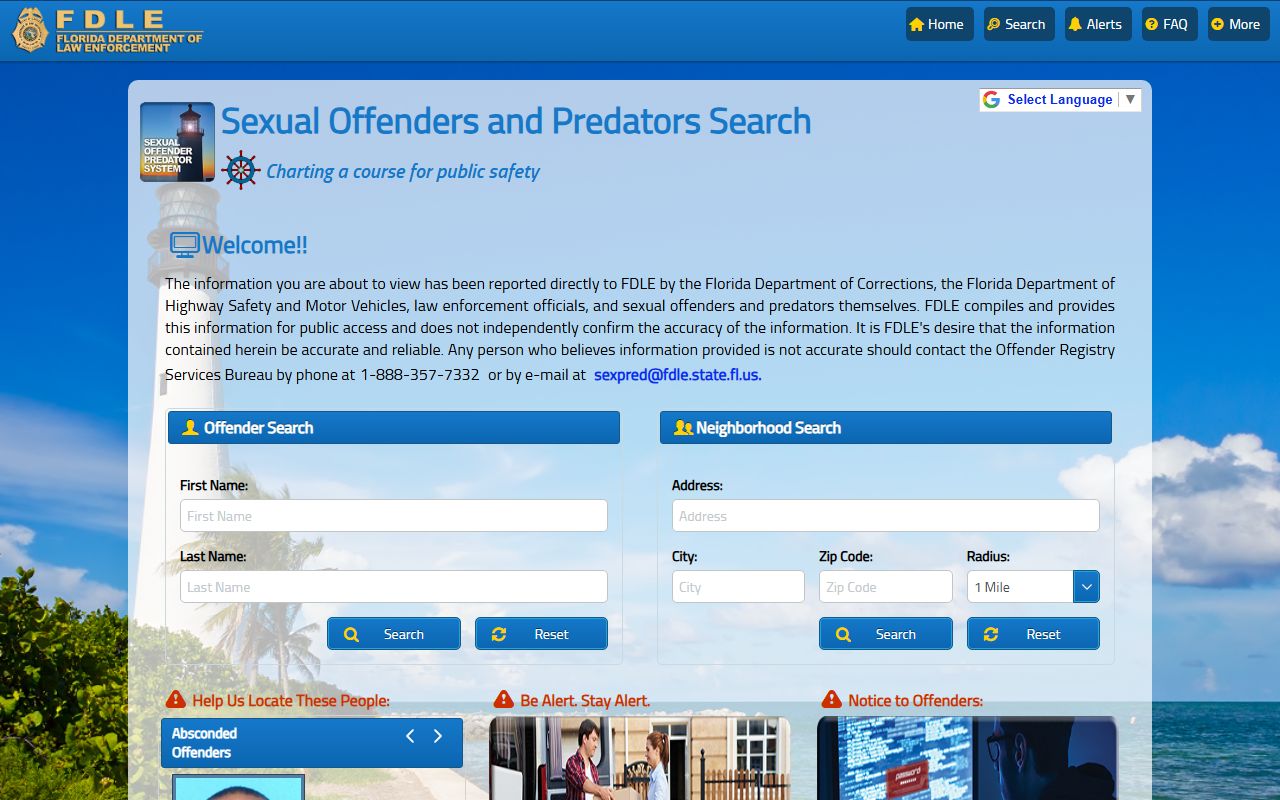
The Sheriff's office also links the FDLE registered sex offender and predator search from its own site, which is a separate public-safety database rather than a charge lookup. Use the FDLE criminal history check or the Clerk's docket when the goal is the charges that followed an arrest.
Restricted Court Records After an Arrest in Martin County
Not every record tied to an arrest is open. Florida law and the Sheriff's own records page point to categories that can be withheld or redacted, including juvenile records, active criminal investigative information, certain victim information, and records that a court has sealed. A dismissed charge can also be sealed later, which pulls it from public view. When a case or document is restricted or simply not online, the Clerk's office, the court, and the Sheriff's public records portal are the official channels to ask, with the understanding that exempt material may stay redacted.